

1. Strengthen Website Security
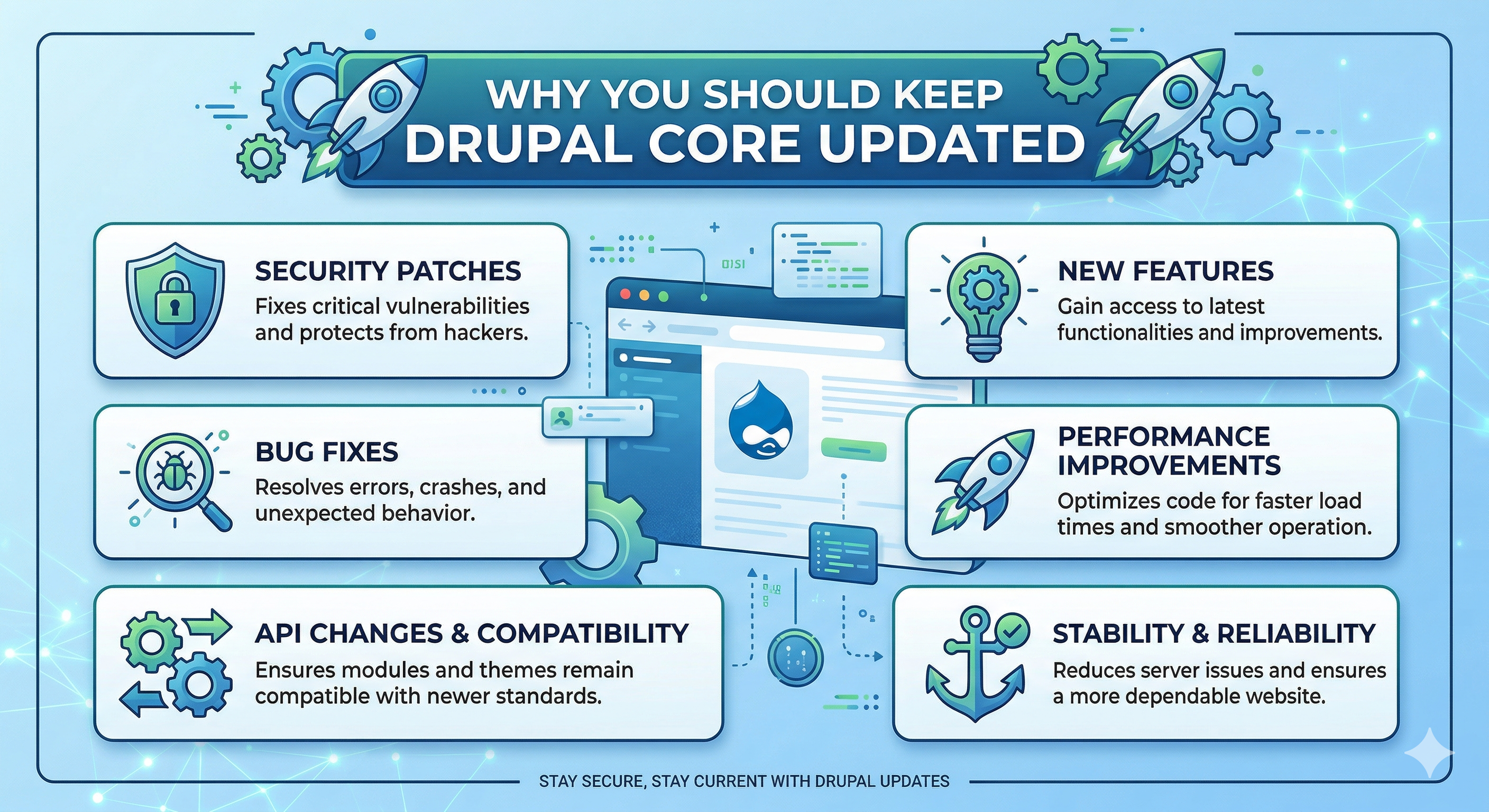
One of the most important reasons to keep Drupal core updated is security. Drupal is widely recognized for its robust security framework, but like any software, vulnerabilities can still be discovered over time. The Drupal security team actively identifies and patches these issues, releasing updates that protect your site from potential exploits.
Failing to apply these updates leaves your website exposed to hackers who specifically target outdated systems. By staying current, you significantly reduce the risk of data breaches, malware infections, and unauthorized access.
2. Improve Performance and Stability
Drupal core updates often include performance enhancements and bug fixes that improve how your website functions. These updates can lead to faster page load times, smoother user interactions, and better handling of high traffic.
Over time, outdated code can become inefficient or incompatible with newer technologies. Regular updates ensure your website runs optimally and delivers a seamless experience to users.
3. Access New Features and Enhancements
Each Drupal core release brings new features, improved tools, and enhanced functionality. By keeping your core updated, you gain access to these improvements, which can help you build better content, streamline workflows, and enhance the overall user experience.
Missing out on updates means missing out on innovation that could benefit your website and your audience.
4. Maintain Compatibility with Modules and Themes
Drupal websites often rely on contributed modules and themes to extend functionality and customize design. These components are continuously updated to remain compatible with the latest version of Drupal core.
If your core is outdated, you may encounter issues such as broken features, layout problems, or even complete module failure. Keeping everything in sync ensures your site remains fully functional and visually consistent.
5. Ensure Long-Term Support
Drupal versions have defined lifecycles, including end-of-life (EOL) dates. Once a version reaches EOL, it no longer receives security updates or official support. Running an unsupported version puts your site at significant risk.
By regularly updating Drupal core, you ensure your website stays within a supported version, benefiting from ongoing maintenance and community support.
6. Enhance SEO and User Experience
Search engines favor websites that are fast, secure, and user-friendly. Drupal updates often contribute to better performance and improved accessibility, both of which are key factors in search engine rankings.
A well-maintained site not only ranks better but also keeps visitors engaged, reducing bounce rates and increasing conversions.
7. Reduce Technical Debt
Delaying updates can lead to accumulated technical debt, making future upgrades more complex, time-consuming, and costly. Regular, incremental updates are much easier to manage than large, infrequent overhauls.
Staying current helps you avoid major disruptions and keeps your development efforts manageable.
Best Practices for Updating Drupal Core
To ensure smooth updates, consider the following best practices:
- Backup your website before applying any updates.
- Test updates in a staging environment before deploying to production.
- Review release notes to understand changes and potential impacts.
- Keep modules and themes updated alongside core.
- Schedule regular maintenance to stay consistent.
Conclusion
Keeping Drupal core updated is essential for maintaining a secure, high-performing, and future-proof website. It protects your site from vulnerabilities, enhances performance, ensures compatibility, and provides access to the latest features.
Regular updates are not just a technical necessity—they are a strategic investment in your website’s success. By making updates a priority, you safeguard your digital presence and deliver a better experience to your users.